What Everest Revealed About High-Performing Teams
By Marc Wicks MBE
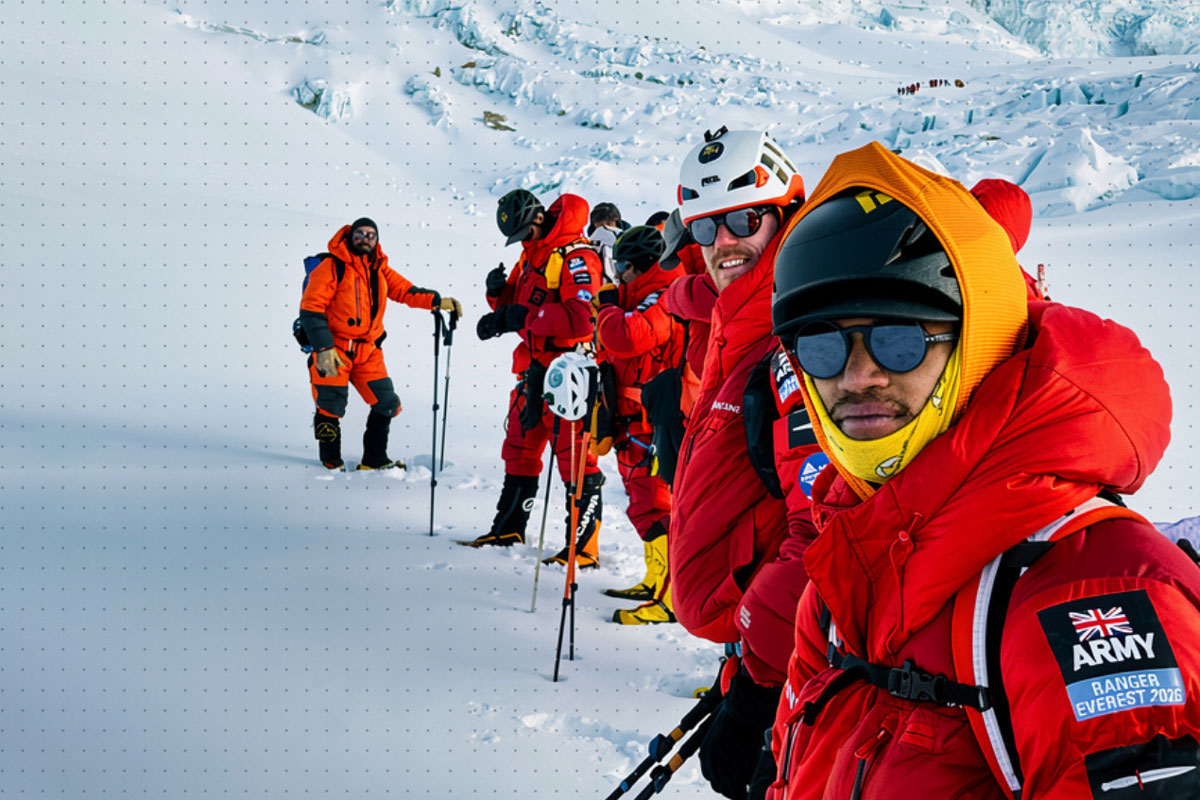
As the Ranger Regiment Everest expedition comes to a close and the team returns to their daily roles, I have found myself reflecting on the journey many of us have followed over the past few months.
Like many people, I was inspired by the achievement itself. Reaching the summit of the highest mountain on Earth is no small feat. It requires commitment, preparation, courage and determination in equal measure.
But if I am honest, the mountain was never really what interested me most. What stood out throughout the expedition was not the altitude or even the summit itself. It was the people, the culture, the leadership, the teamwork and the countless unseen moments that sit behind any successful outcome.
Over the course of my career, I have learned that success is rarely determined by the challenge itself. More often, it is determined by how people come together to face it. The environment may change, but the principles do not.
That was one of the first things that struck me during the expedition. The respect shown towards the people of Nepal, their culture, heritage and communities. It was a reminder that no significant achievement happens in isolation. Behind every successful team sits a wider network of people who contribute to that success in ways that are not always visible.
For me, that speaks directly to culture.
Culture is what people do
Culture is often discussed as though it is something organisations create through statements, values or presentations. In reality, culture is demonstrated through behaviour and the way people conduct themselves.
It is reflected in what people choose to recognise, what they choose to reinforce and how they treat those around them. The strongest cultures are built on respect, humility and a shared understanding that success is always a collective effort.
Resilience belongs to the team
As the expedition progressed, another theme became increasingly apparent.
Resilience.
Not resilience in the way it is often described. Not simply pushing harder or enduring discomfort. Real resilience is something different. It is the ability of a team to remain aligned when circumstances become difficult. To adapt without losing direction. To maintain trust and cohesion when plans change or conditions deteriorate.
Throughout thirty two years in the Royal Marines Commandos and later within NATO, I saw this repeatedly. People often assume resilience is an individual quality. In my experience, the most resilient teams were rarely built around the toughest individuals. They were built around shared purpose, mutual trust and a collective commitment to the mission.
The individual matters, but the team matters more.
That is where leadership becomes so important.
Intent gives people freedom to act
One of the reasons Mission Command has endured as a leadership philosophy is because it recognises a simple truth. People perform at their best when they understand why they are doing something, not just what they are being asked to do.
When intent is clear, people can think. They can adapt. They can solve problems and make decisions without waiting for instruction. They remain aligned because they understand the purpose behind their actions.
The Everest expedition demonstrated this beautifully.
No leader can control every decision on a mountain. No leader can anticipate every challenge. Success depends on trust, clarity and empowerment.
The same is true within organisations.
The most effective leaders are not those who provide every answer. They are the ones who create clarity, establish trust and enable people to act confidently within a shared framework of intent.
The summit is not the end
Then came the summit. The moment everyone had been working towards.
And yet, as I have reflected recently, the summit was never the end of the mission. Experienced teams understand this instinctively. Success deserves recognition. It should be celebrated. Shared achievement strengthens teams and creates memories that last a lifetime.
But the best teams do not become defined by a single success. They remain grounded. They reflect honestly. They learn and then they move forward.
Throughout my military career, some of the most capable people I served alongside possessed this quality. There was pride in achievement, but there was also humility. An understanding that another challenge would always come and that the standards which created success yesterday were the same standards required tomorrow.
That mindset is just as relevant in organisations.
Many teams can perform when circumstances demand it. Many can rise to a significant challenge. The real test is whether they can sustain that performance over time.
Can they maintain focus when the excitement fades? Can they remain aligned when urgency disappears? Can they continue to find meaning and purpose in the next challenge, even if it appears smaller than the one that came before it?
Those questions sit at the heart of long term success.
What remains after Everest
Looking back on the expedition, every lesson seems to point towards the same conclusion. High performance is rarely about individual brilliance. It is about alignment. It is about people understanding the mission, trusting one another and committing themselves to something larger than their own individual contribution.
When that happens, extraordinary things become possible. Not because the environment is favourable. Not because the challenge is easy. But because the team is aligned.
At Mission Inc. this is why we place such importance on strategic alignment and intent led leadership. The environments organisations operate within will continue to evolve. Markets will change, technology will advance and new challenges will emerge.
The principles that underpin high performance remain remarkably constant though. People need purpose, teams need trust, culture matters and leadership needs to begin with intent.
The Everest expedition may be over, but the lessons were never really about the mountain.
They were always about the people and the Mission Command philosophy.



.jpg)

Ready to Transform Your Organisation?
Take the next step towards aligning your leadership team and driving growth with Mission Inc.
Schedule a consultation with our team to discuss how we can help you achieve long-term success.